Held Taut: On the Ancestral Connection Between Quiltmaking and Hair Braiding
My earliest memories of well-being are of adornment. One moment in particular is Muss wrestling me into an Easter dress as a toddler, then sitting me on a pillow between her knees to grease my scalp and braid my hair. It’s a scene familiar to many Black folks, a piece of our cultural heritage—like nameplates or quiltmaking.
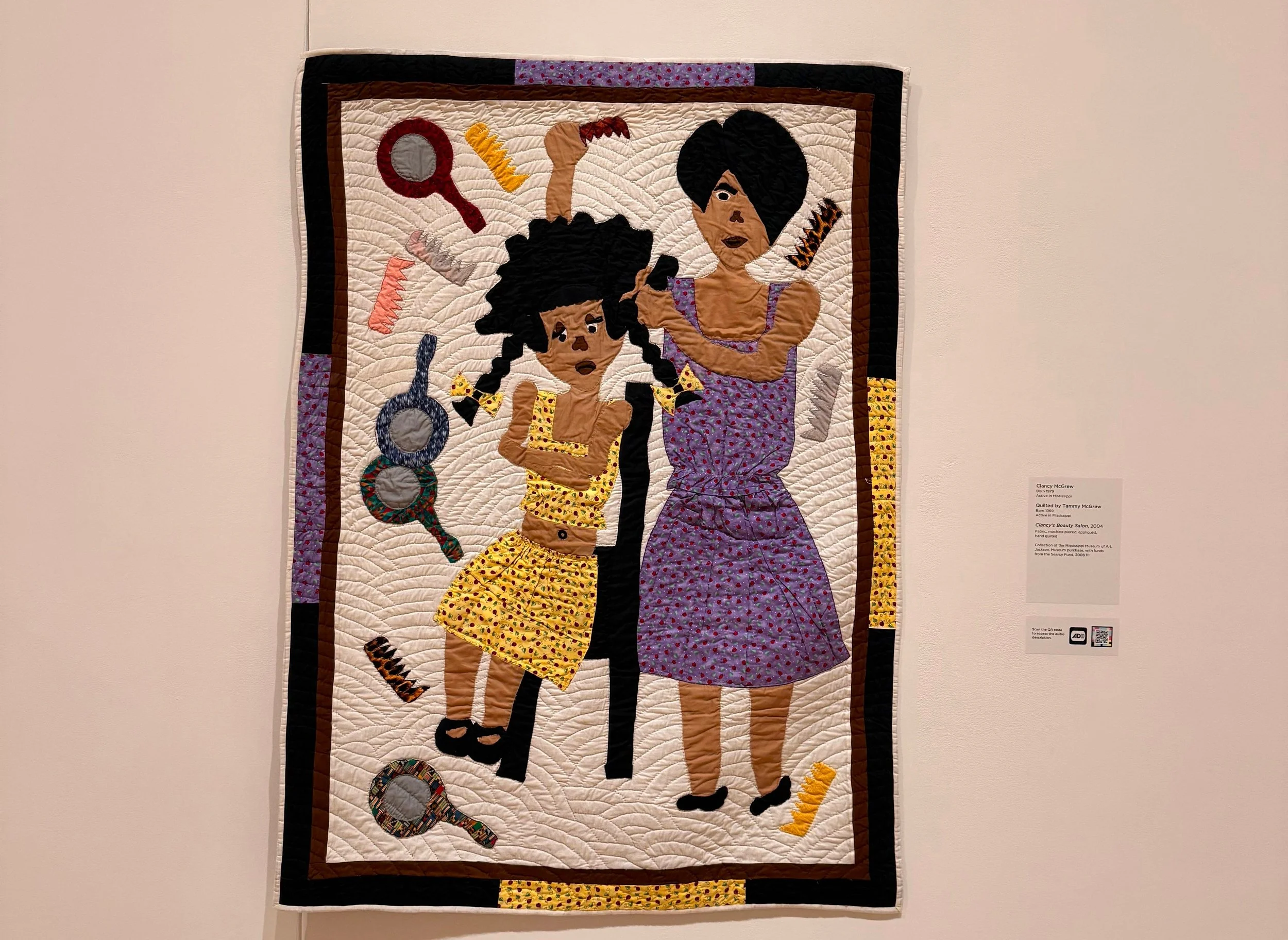
Clancy’s Beauty Salon, quilted by Tammy McGrew
Last weekend, I visited the Weatherspoon Museum in Greensboro to see Of Salt and Spirit: Black Quilters in the American South. The exhibit is built around the folklorist Roland L. Freeman’s decades of collecting from and building community with Black quilters across the region. Every quilt in the room was a testament to the depth of Black textile history and skill, but I kept coming back to Clancy’s Beauty Salon, quilted by Tammy McGrew.
Muss was the only quiltmaker I knew, and maybe the only one in our family. She also used to comb and braid my hair. At first, while I was asleep, until I was old enough to take the tug of the comb, her hands pulling my hair taut against my scalp.
Braiding and quilting are the same discipline, pulling taut different materials. Both begin with sectioning. Scraps cut down and set into a grid, a scalp parted into square or triangular sections with the tail of a comb, every portion guaranteed a position in the greater masterpiece being stitched before any compilation begins. Both center around a Black woman’s lap, both live or unravel on tension—stitch too loose, it puckers; too tight, the seam or the scalp tears—and both require using your eyes to learn before the knowledge transfers through your fingertips and onto whoever sits between your knees.
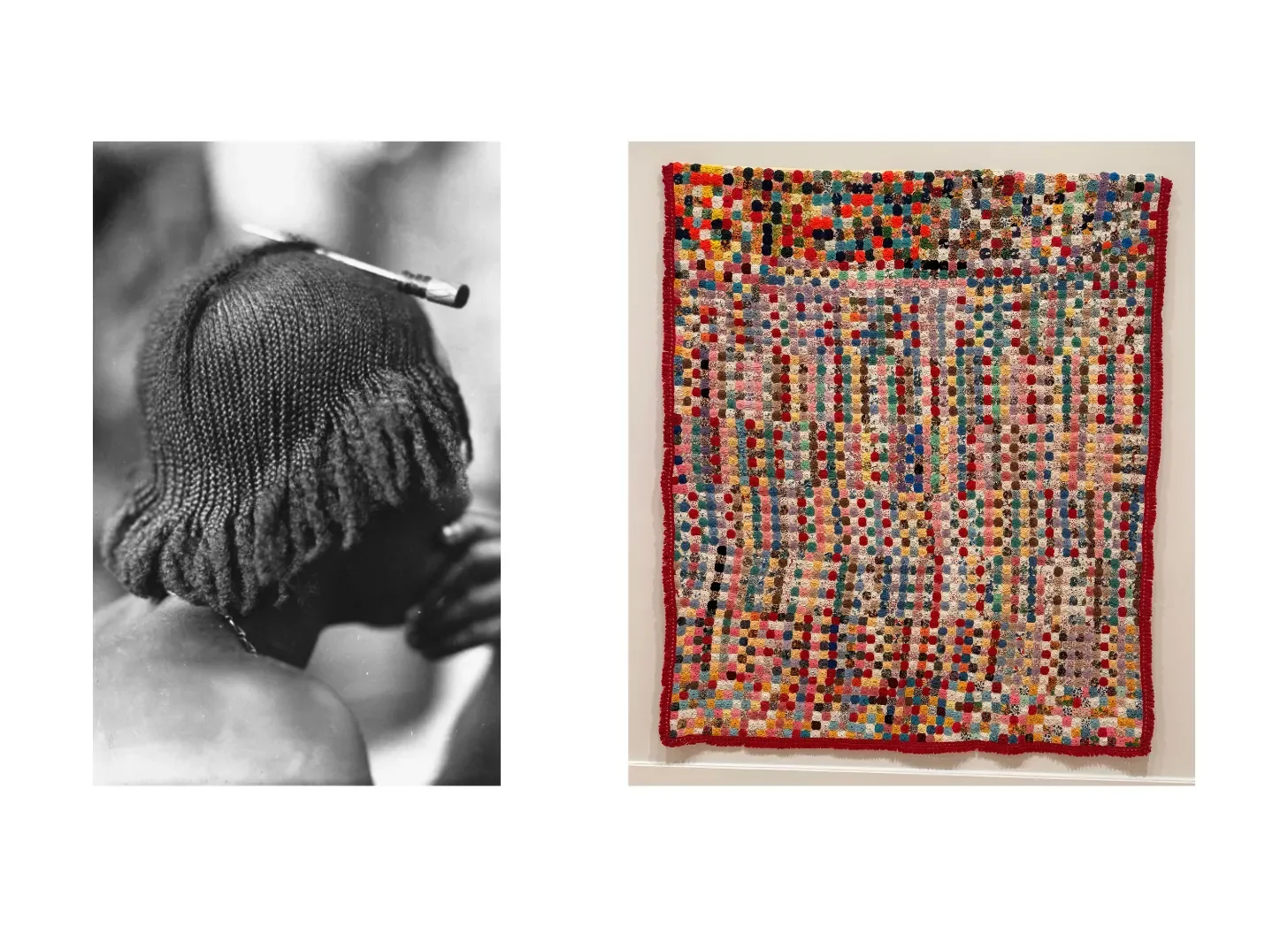
On the left is a photo of an unknown woman from the Collectie Wereldmuseum (v/h Tropenmuseum), part of the National Museum of World Cultures.
Moving through the exhibit made it easy to see the connection between hair braiding and quiltmaking. Buttercup Spread, quilted by Annie Dennis in 1972 (above right), reminded me of the colorful hair bows and neat cornrows Black folks have been braiding into our hair for centuries.
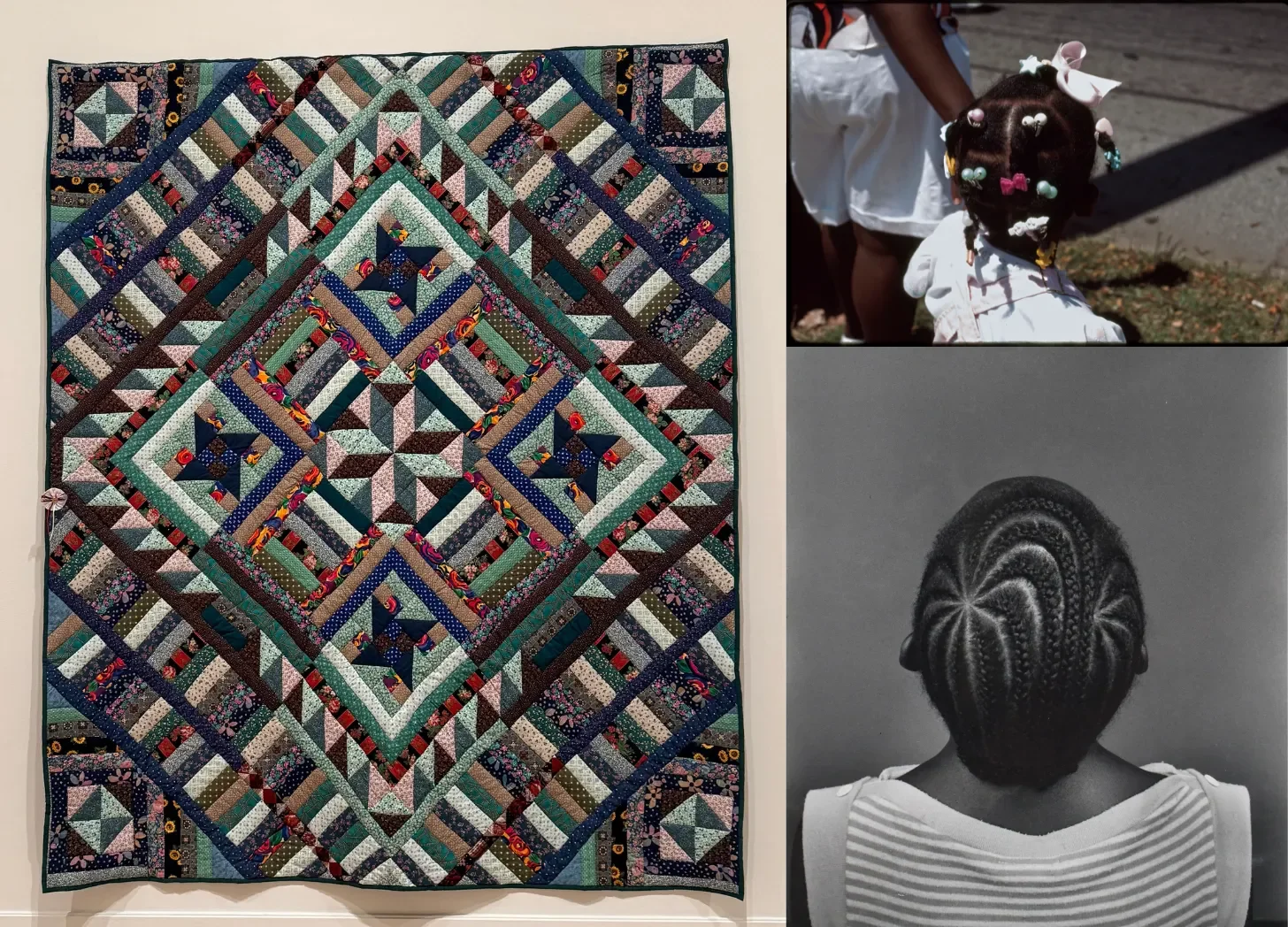
(Top right: Atlanta, Georgia: 1988 West End Festival. Young African American girl’s braids and hair decorations (parade spectators), Selections from the Georgia Traditional Arts Research Collection, presented in the Digital Library of Georgia; Bottom right: From the Roland L. Freeman Photograph Collection housed at the University of North Carolina Libraries, Digital Collections Repository.)
This quilt by Virginia Thompson (above left) has perfect symmetry, conjuring images of the neat braid maps and bursting designs woven into both cloth and hair.
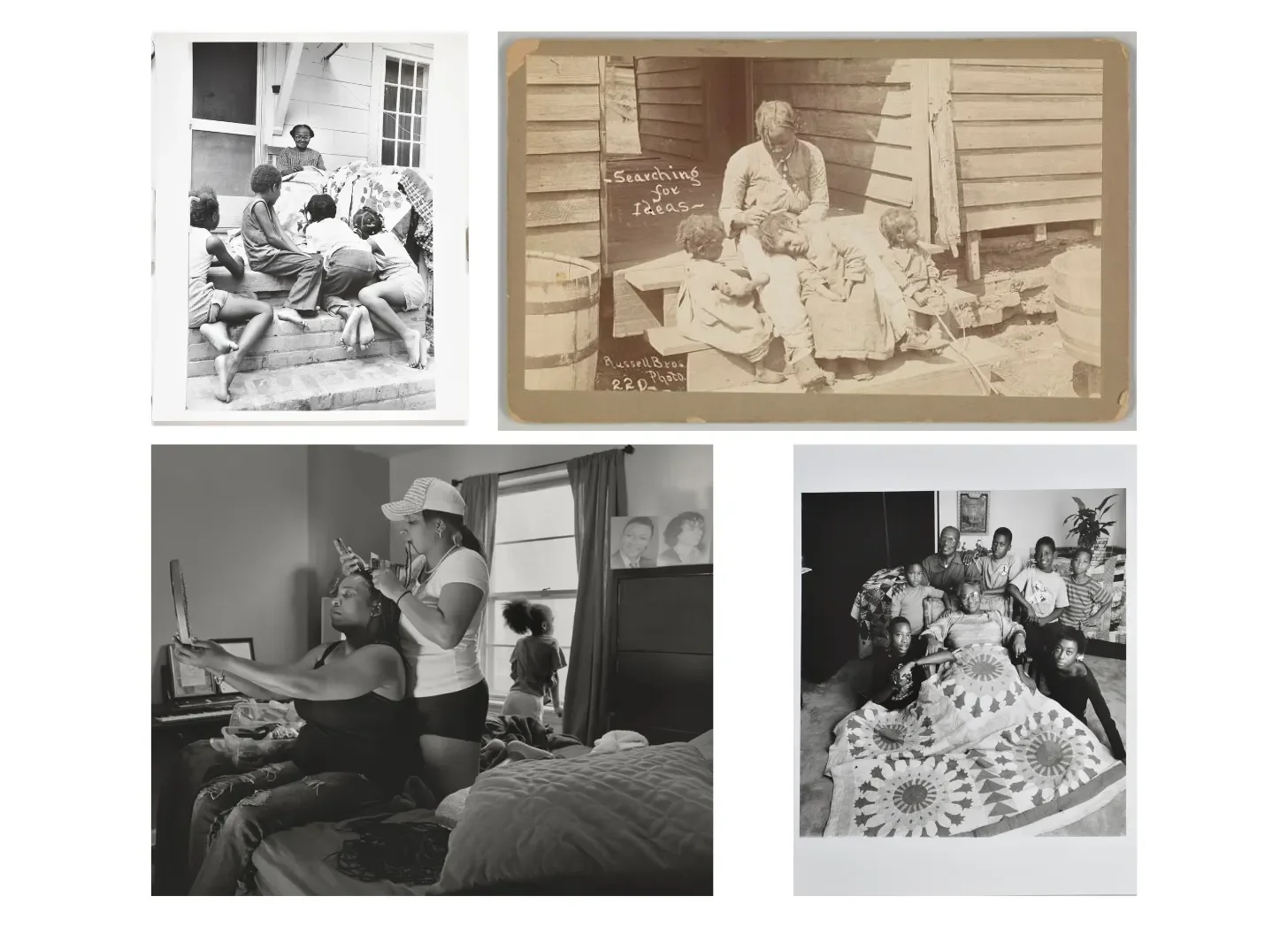
Sourcing clockwise from upper left: University of North Carolina Libraries, Digital Collections Repository - Part of Roland L. Freeman Photograph Collection; Collection of the Smithsonian National Museum of African American History and Culture; Shea Doing Crochet Braids in Her Cousin Andrea’s Hair for Andrea’s Daughter’s Wedding, 2016–17. Photograph by LaToya Ruby Frazier. Collection of the Smithsonian National Museum of African American History and Culture; University of North Carolina Libraries, Digital Collections Repository - Part of Roland L. Freeman Photograph Collection
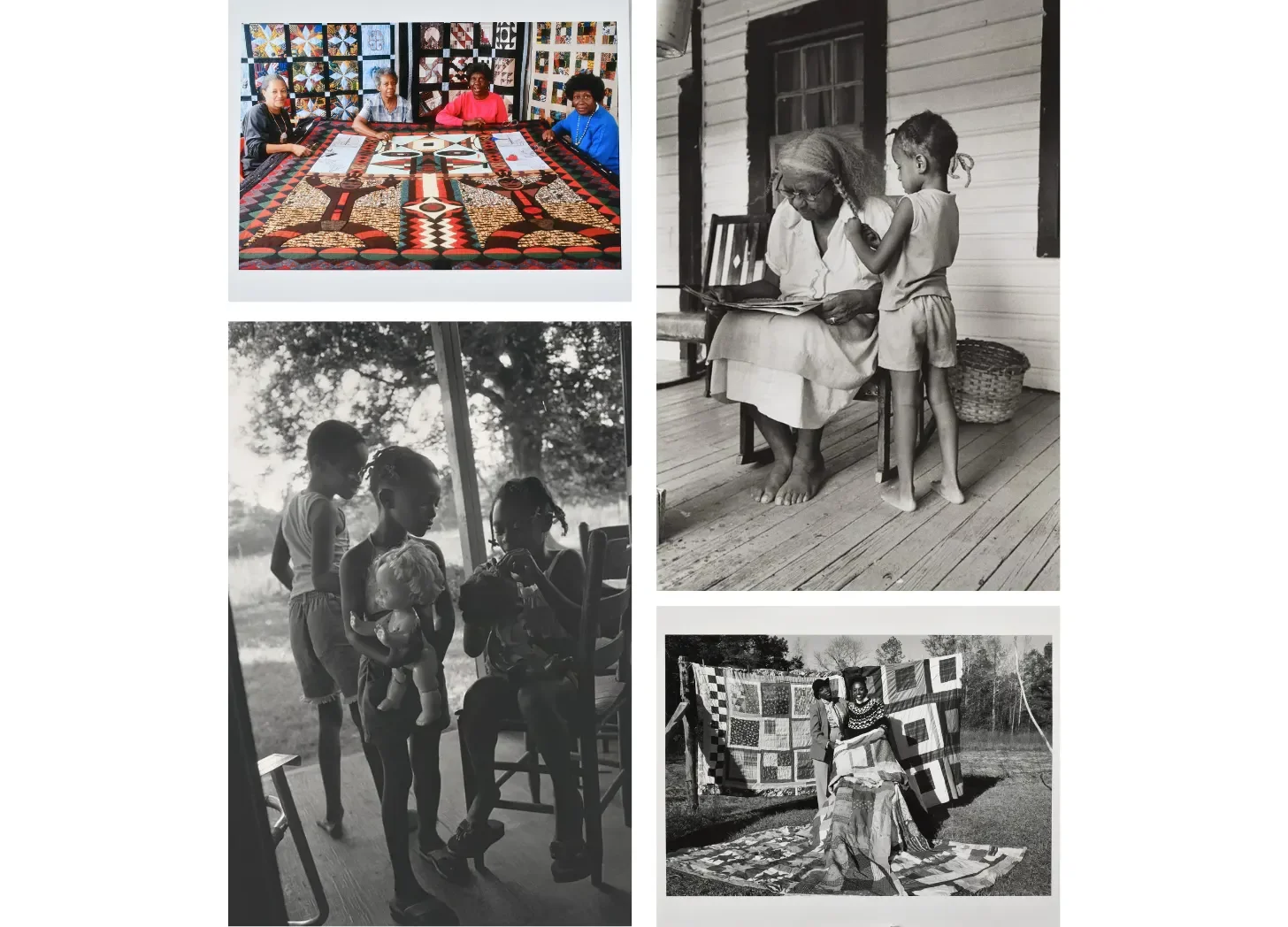
The bottom left photo was taken by Jeanne Moutoussamy-Ashe. All others were taken by Roland L. Freeman.
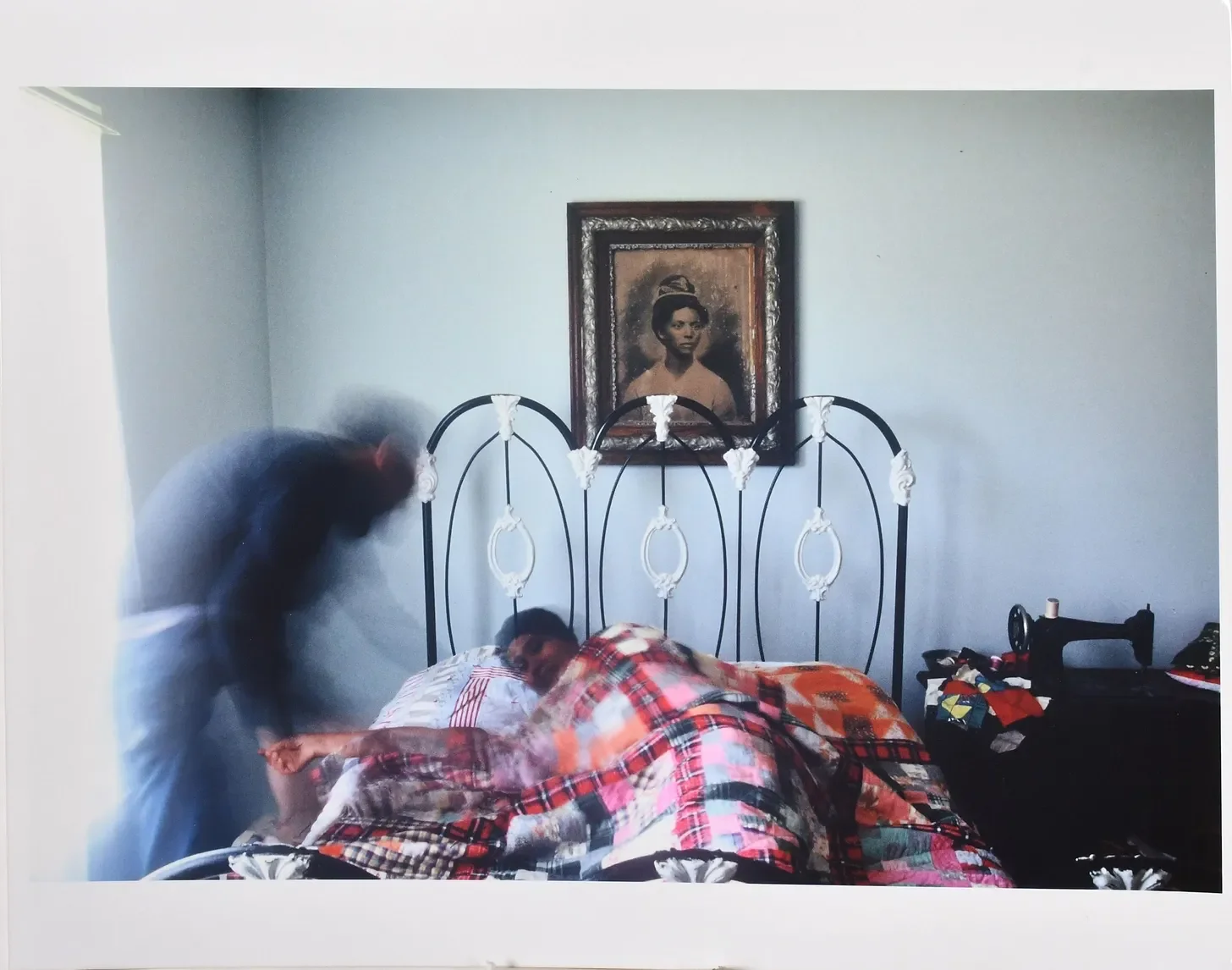
University of North Carolina Libraries, Digital Collections Repository - Part of Roland L. Freeman Photograph Collection
I got a bit emotional while putting this together. Seeing the lineage of it all. It’s not just the act of hair braiding or creating quilts that moves through families; sharing them does, too. Grandchildren get to spend time with their grandmothers as they make and mend the quilts, and the same can be said for hair braiding. Both practices are not just transferences of care between two people, but symbols of communal love and well-being. And they’re both sources of joy and pride.
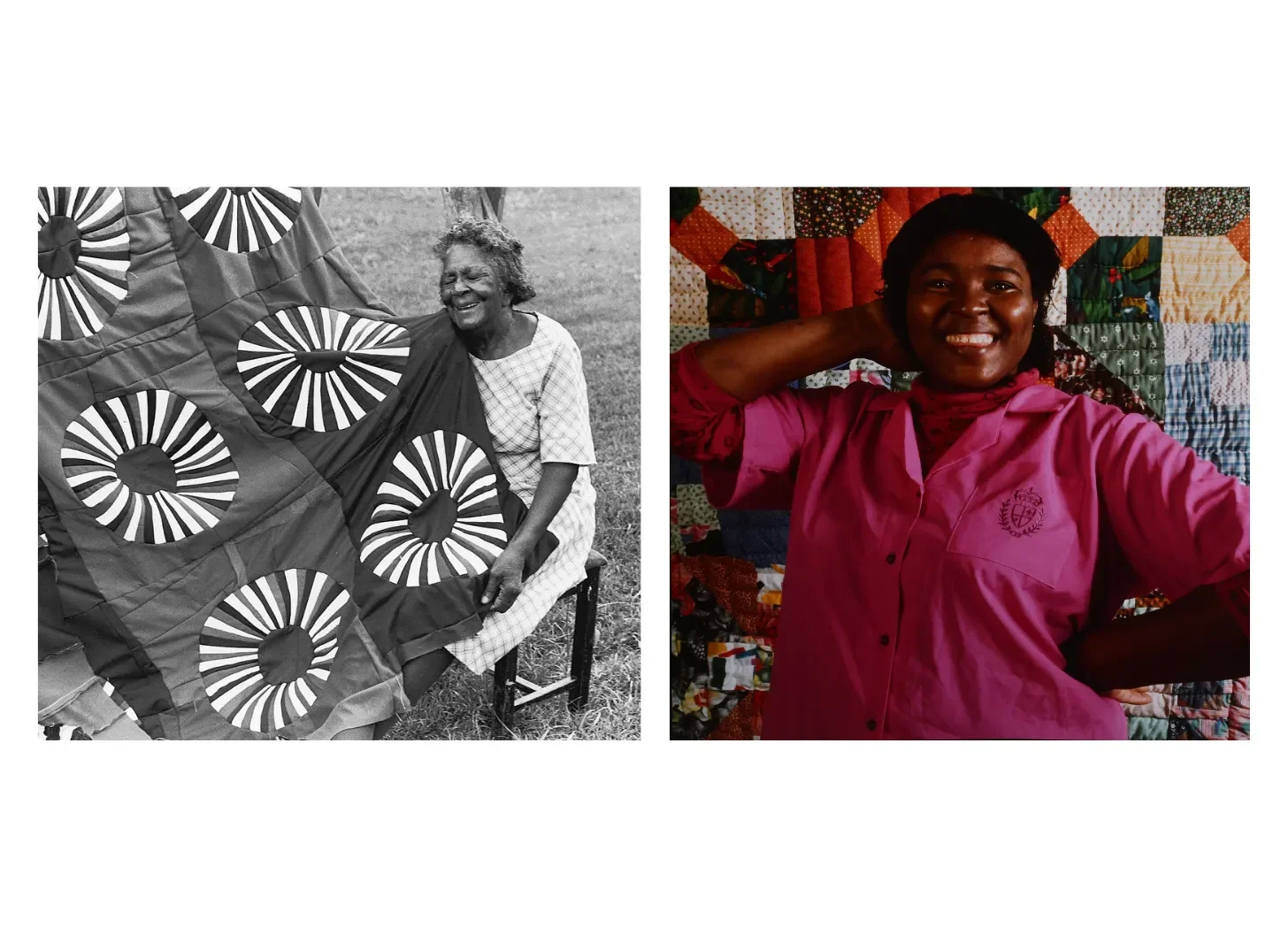
Left: Fannie Lee Teals with her red, white, and blue American Revolution Bicentennial quilt in Tifton, Georgia, 1977. Library of Congress. Right: University of North Carolina Libraries, Digital Collections Repository - Part of Roland L. Freeman Photograph Collection (70147)
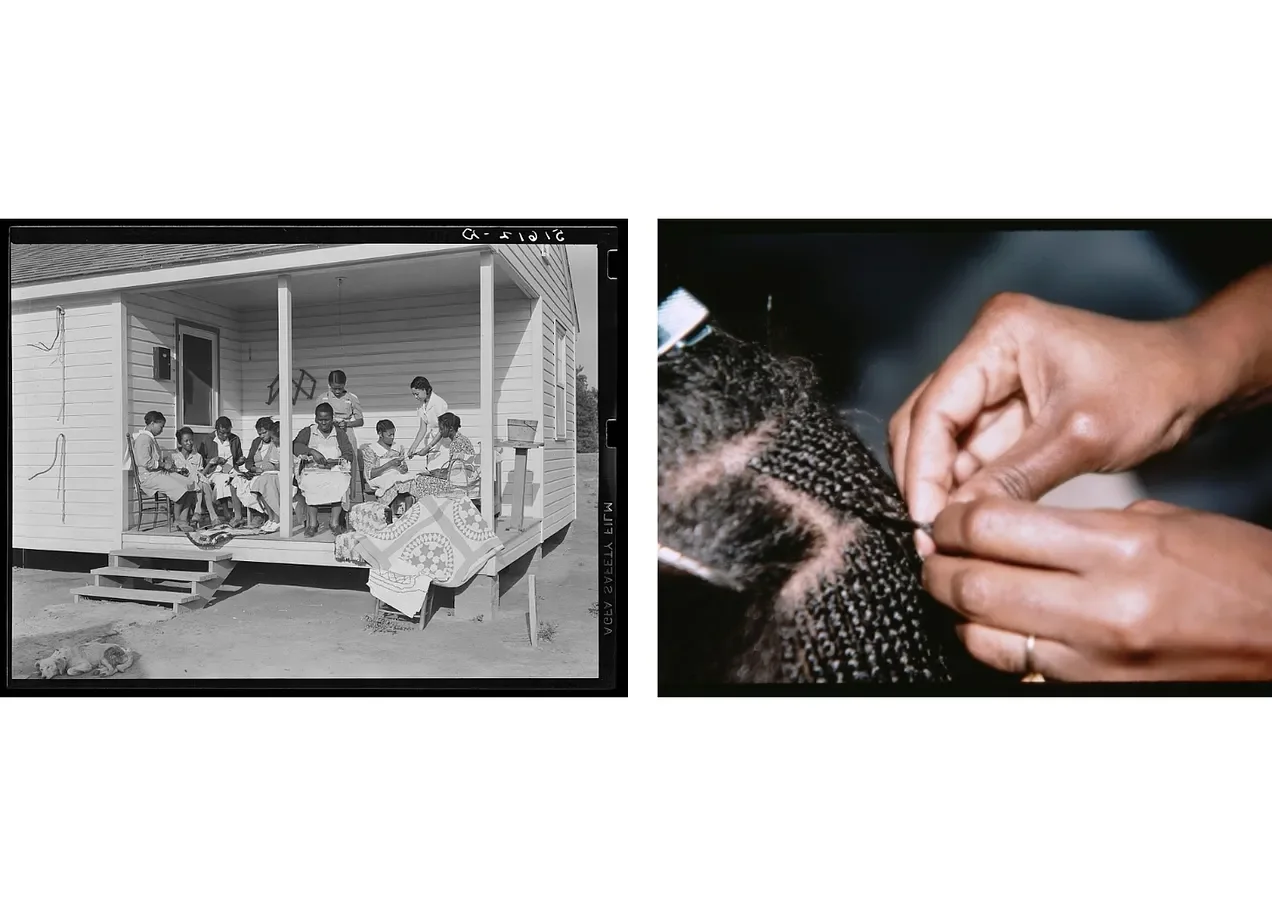
Left: A home economics class making quilts photographed by Marion Post Wolcott, Flint River Falls, Georgia, 1939, Source: Library of Congress. Right: Sabrina Glenn- Helen's Barber Shop. Selections from the Georgia Traditional Arts Research Collection, presented in the Digital Library of Georgia.
Then there’s the shared skillset. I’m not saying that everyone who can braid can sew—Muss taught me both, but only the former stuck—but there’s a similarity in the dexterity both require. It requires the same creative eye, too.
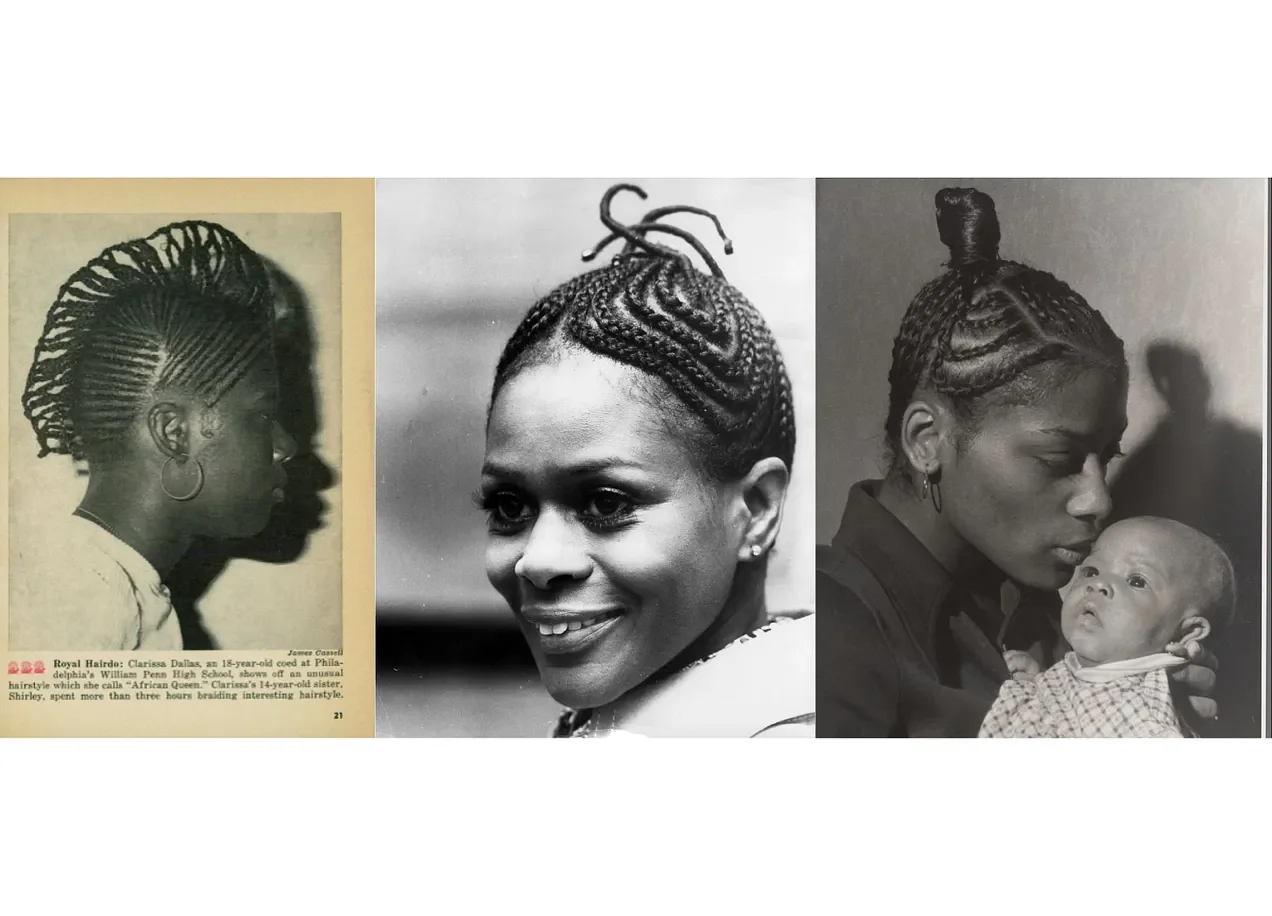
Left to Right: An ad from the Ebony Magazine Archives, the lovely Cicely Tyson, and “Portrait of a Mother with braided hair holding a young baby.”
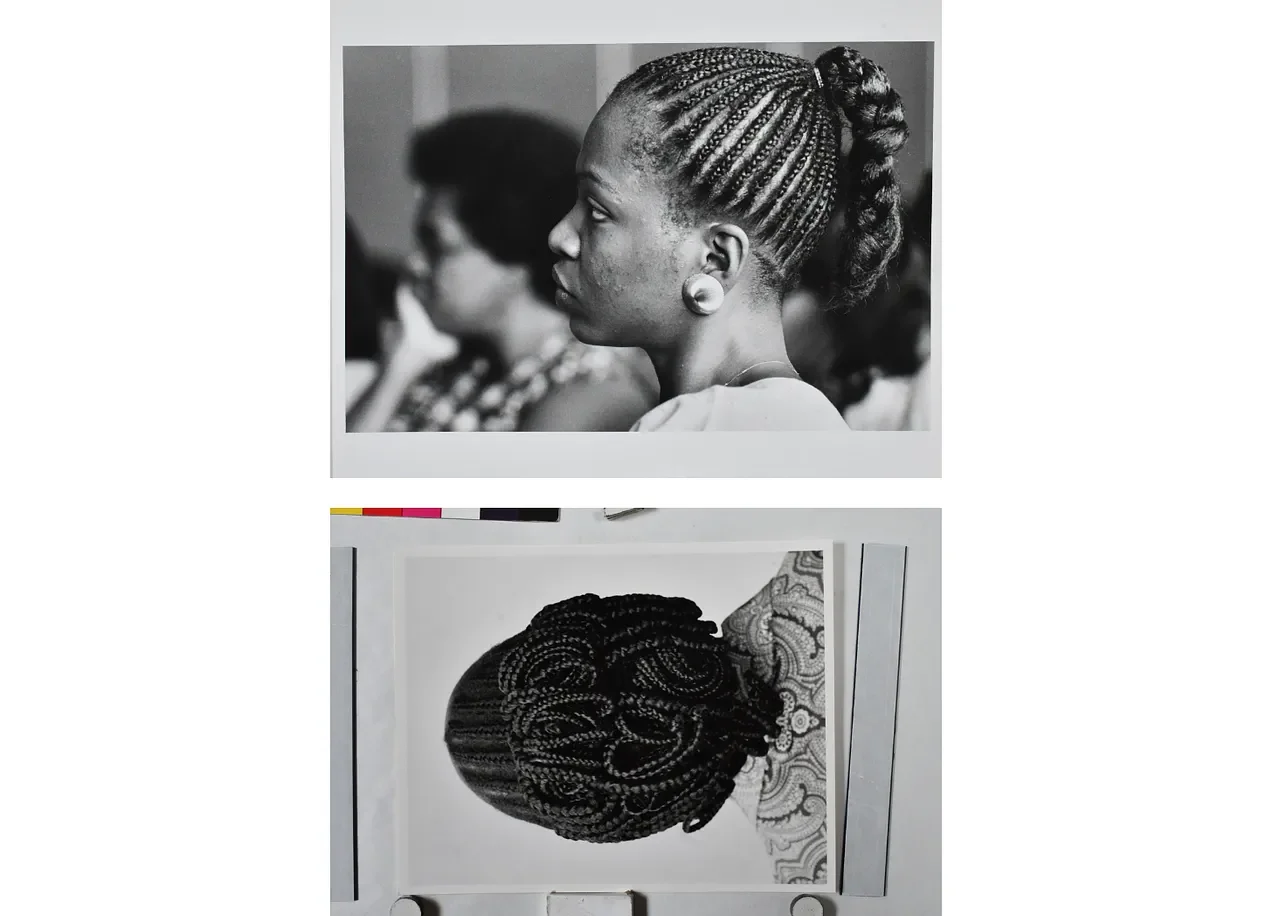
University of North Carolina Libraries, Digital Collections Repository - Part of Roland L. Freeman Photograph Collection (70147)
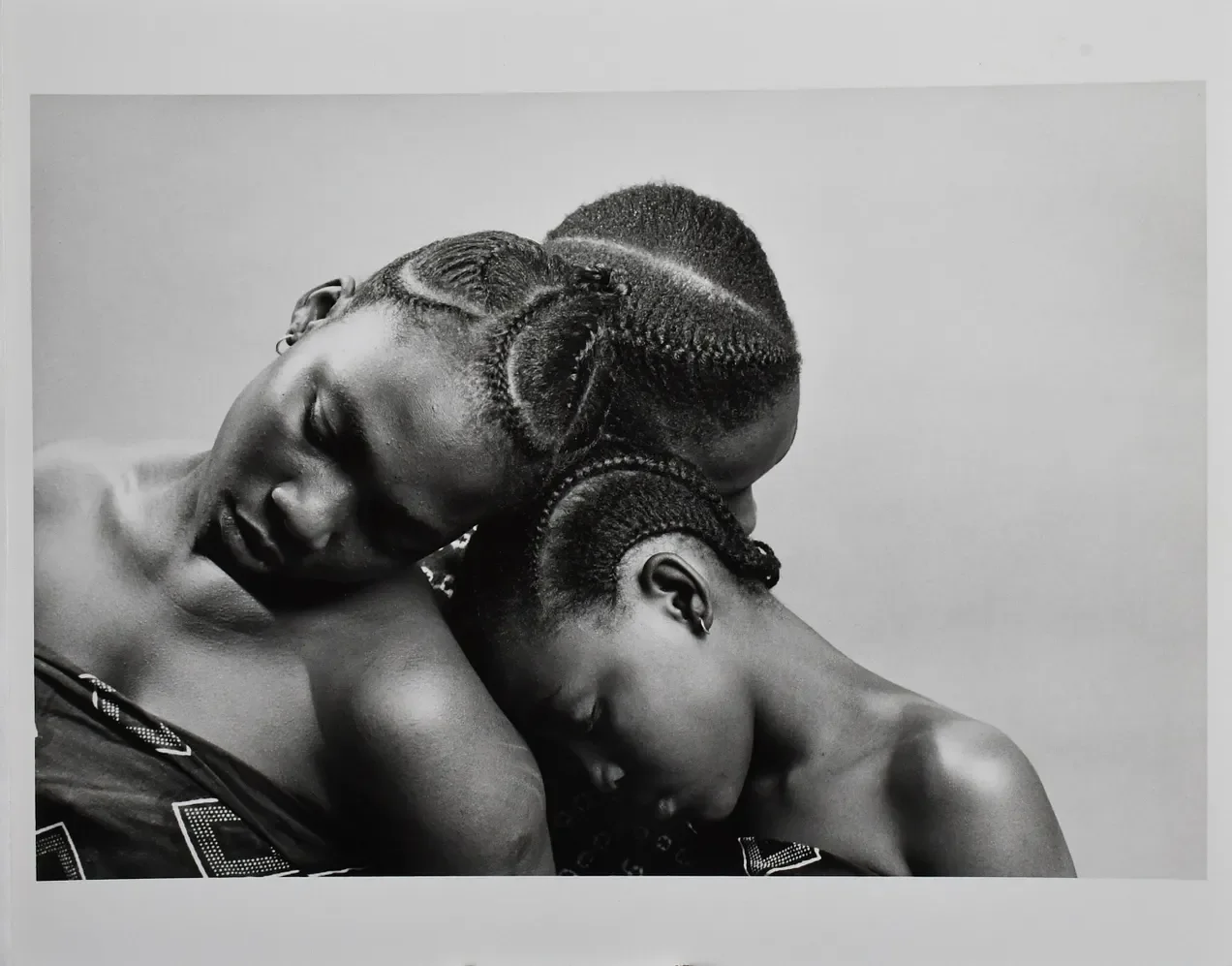
University of North Carolina Libraries, Digital Collections Repository - Part of Roland L. Freeman Photograph Collection (70147)
I came to this from adornment, and I was looking for symmetry and beauty. I found it. I’m most grateful that, as I sifted through hundreds of photos to make this connection visible, this became a story about how much labor and knowledge lie behind beauty when Black women are the ones making it.
We are lucky to behold these labors of love.